
Smart Tech Considerations: Convenience or Energy Savings?

November 19, 2026

By: Abby Berry

Smart home technologies can make everyday tasks easier, from adjusting the thermostat with your phone to starting an appliance remotely. Many smart devices also promise better efficiency. But while some smart technologies can help lower energy use, others are designed primarily for convenience. Before investing in the latest smart technologies, consider the features that matter most to you.

Start with your goals. Smart appliances and devices connect to the internet, typically through Wi-Fi or Bluetooth, allowing you to control them with a smartphone, tablet or voice assistant. Some can monitor energy use, automate tasks or learn your household’s routines to help optimize performance.

Whether these features are worth the cost depends on your lifestyle, budget and existing appliances. If convenience is your priority, smart technology can simplify your daily routine. But if your goal is to lower your energy bills, a new device may not be necessary. Adjusting your daily energy habits and making better use of the appliances you already own can often deliver savings without the upfront investment in new tech.

Before purchasing a smart device, research its features, compatibility and potential benefits. Consider the purchase price alongside any expected long-term savings. A higher price tag doesn’t automatically mean greater efficiency.

If you want to explore smart technology to help manage home energy use, consider these options.

Smart thermostats can automatically adjust heating and cooling settings based on your schedule, preferences or whether you’re home. Some models learn your routines, while others let you control temperatures remotely. Because heating and cooling account for a significant share of household energy use, a smart thermostat may help reduce waste. Check compatibility with your HVAC system before purchasing. You can also save energy with a traditional thermostat by adjusting the temperature when you’re asleep or away.

Smart bulbs and switches let you turn lights on or off remotely, establish schedules and, in some cases, use motion sensors to prevent lights from staying on in empty rooms. These features may be useful if your household frequently leaves lights on. For a simpler, lower-cost approach, turn off lights when you leave a room and replace older bulbs with energy-efficient LEDs.

Smart plugs fit into standard outlets and allow you to schedule or remotely control compatible electronics. They can help manage devices that don’t need to run continuously, although savings depend on what you plug into them and how you use them.

Smart appliances, including refrigerators, washers, ovens and water heaters, also offer features such as remote monitoring, alerts and customized settings. However, internet connectivity alone does not guarantee lower energy consumption. Evaluate the specific features and look for credible efficiency information before upgrading an appliance that still works well.

Smart home technology can offer convenience, control and, in some cases, meaningful energy savings. The key is understanding the difference. A device that makes life easier may be worth the investment even if it doesn’t lower your electric bill. But if saving energy is your primary goal, changing everyday habits may be the most practical place to start.

Before buying, ask yourself what problem you want to solve. Then choose the approach that best fits your home, budget and priorities. Sometimes the smartest energy decision isn’t buying something new—it’s making better use of what you already have.


November 18, 2026
By: NPPD's Energy Efficiency Program Manager Cory Fuehrer Some called you courageous while others called you crazy. Regardless, you volunteered to host the big meal for both sides of your family this holiday season. But have you considered the impact thirty people feasting will have on your energy bills? Here are a few ways you can reduce your energy use: Lower the thermostat. Long before the first vehicle turns into your driveway, lower your thermostat to 65°F and give your furnace a break. When you pack 30 people into a home, they act as a massive, natural radiator. In fact, if you start cooking a few hours before everyone arrives, turn the temperature down before you turn the oven on. Consider installing a smart thermostat or a temporary lockbox. With that many guests, someone will inevitably feel warm or cold; letting people constantly adjust the dial will cause your HVAC system to short-cycle and waste immense amounts of energy. Keep the fireplace damper closed. Unless you are actively burning wood, an open damper acts like an open window, letting all your expensive heated air escape straight up the chimney. Use the "Nebraska Walk-In Cooler." Do not cram your refrigerator to maximum capacity. When a fridge is tightly packed, air cannot circulate, forcing the compressor to run constantly. Instead, utilize the cold weather. Store hard drinks, sodas, condiments, and raw root vegetables in coolers on your porch or in an unheated garage. Bake multiple dishes at once. If your recipes require similar temperature settings (e.g., 350°F and 375°F), bake them together. It takes nearly the same amount of energy to heat a full oven as it does one that is half empty. Keep the oven door shut. Every time you peek inside, the oven temperature drops by 25°F to 50°F, forcing it to work much harder to recover. Use the oven light and window instead. Match pots to burner sizes. Using a small pot on a large electric burner wastes more than half the heat generated. Also, remember that keeping lids on your pots traps heat and cuts cooking time significantly. Utilize small countertop appliances. Whenever possible, skip the massive standard oven. Slow cookers, instant pots, air fryers and toaster ovens use roughly 50% to 75% less energy than a conventional oven and won't overheat your kitchen. Use the dishwasher over handwashing. Modern, Energy Star®-certified dishwashers use dramatically less water and energy than handwashing a mountain of dishes in the sink. Only run completely full loads. Wait until the dishwasher is full before running it and select the "Eco" or "Normal" cycle.  Turn off "Heated Dry." This is one of the biggest energy hogs in the kitchen. Instead, unlatch the dishwasher door at the end of the cycle and let the dishes air-dry naturally. Your local public power provider, in partnership with Nebraska Public Power District, wish you, your families and friends the very best this holiday season. For more energy-saving ideas to keep you happily sharing good tidings into the new year, contact your local utility or visit www.energywisenebraska.com
November 4, 2026
NRECA's Straight Talk Utility Scams Tip of the Month For November 2026
November 3, 2026
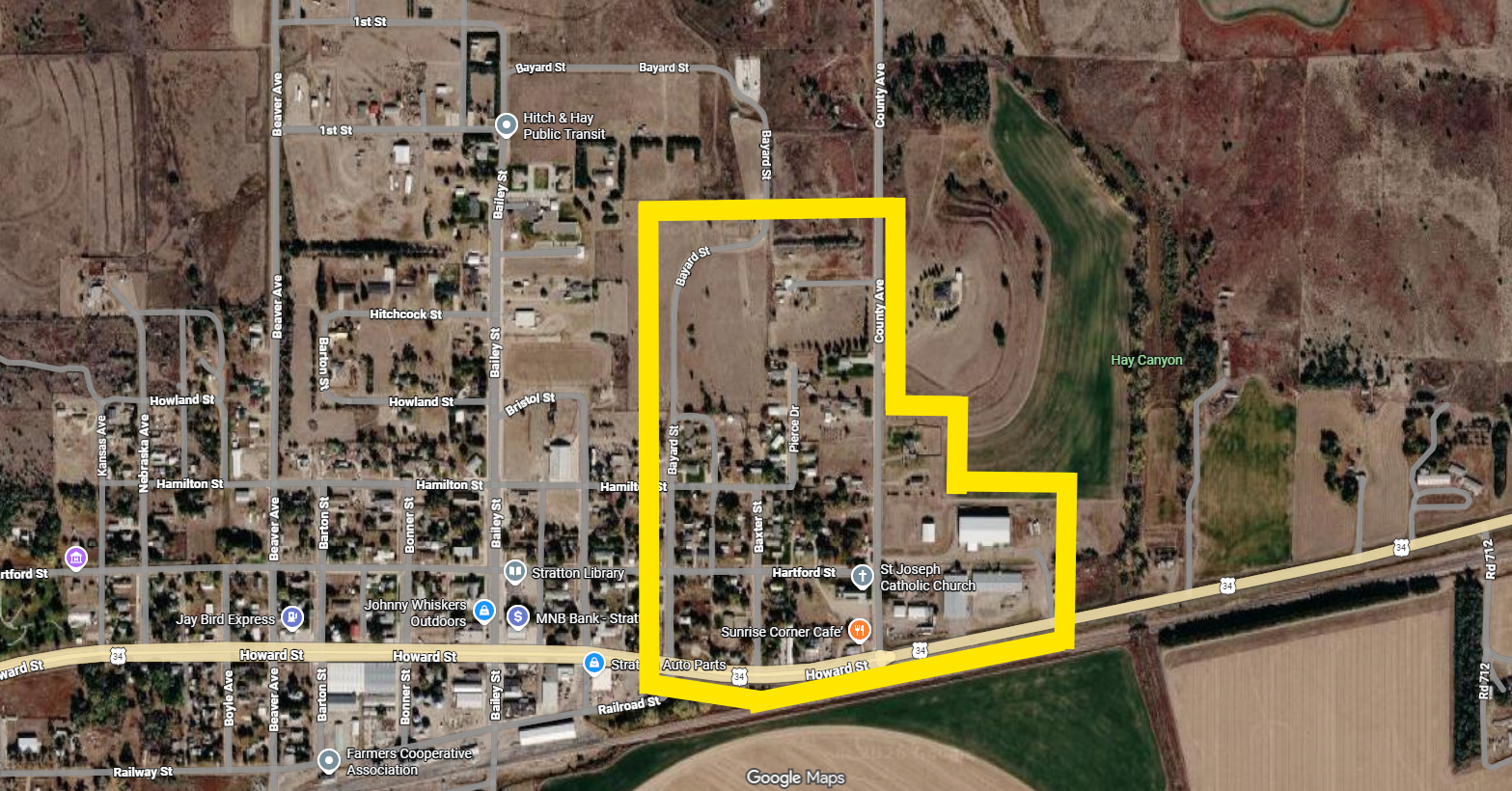
Officials with the Village of Stratton and Southwest Public Power District are coordinating a planned power outage scheduled to begin at 9:00 a.m. on Wednesday, November 4, 2026. Southwest Public Power District will be replacing a joint-use pole located East of the substation, where both SWPPD and the Village of Stratton have facilities. To safely complete the necessary repairs, power to the affected line will need to be shut off for approximately 5 hours. The outage will affect electric services east along Bayard Street to the eastern edge of the Stratton city limits, as well as north along Highway 34 to the northern edge of the Stratton city limits. Please help us by planning accordingly and by spreading the word to your friends and neighbors within the impacted area. Updates will be provided on the SWPPD Facebook page as the work begins and progresses on November 4th.  Should weather become a factor, the contingency date for this operation is 9:00 a.m. Thursday, November 5th, 2026.
October 29, 2026
Late winter and early spring weather in Nebraska can range from devasting blizzard conditions all the way to higher temperatures that haven’t been reached since last fall. They can include high humidity or drought and dry conditions. Regardless of the timing, the weather in Nebraska is famous for changing significantly in a short period of time. During one spring week a customer reported 3 early morning outages over the course of 4 consecutive days. As a customer, it can be quite frustrating to call in over and over again. Especially after normal operating hours and waiting for a crew to respond before getting your own day started. It can be equally frustrating for a crew to respond to the same location multiple times without finding an obvious reason for the outage. But there are simply times that finding and repairing the cause can be like finding a needle in a haystack . Most of the time, crews are looking for something obvious that may have broken along the line. Poles, wires or insulators broken or out of place are easy to spot and usually indicative of the problem. However, it is not entirely unusual for a responding crew to arrive and find nothing out of the ordinary along the stretch of line believed to be the source of the fault. In our industry the events themselves are usually caused by one of three things: man, machine or environment. Weather, wild animals, heavy equipment and human interactions that may have caused this outage could be long gone by the time the utility crews arrive leaving no evidence of their activities. Large birds, critters, vehicles or even high humidity exposing an opportunity for a fault might not be visible during line patrol. In one such incident, after a 3rd call lines were isolated and non-residential services were disconnected for about a week to allow for a pole-top to pole-top inspection of the area suspected to be near the source of the outage. An intact insulator that became dirty and corroded and a steel cutout that carried the fault searching for ground, resulted in the top of the pole eventually was determined to be the culprit. Without a broken insulator, hanging wire or electrical arcing visible from the ground line patrol at 3:00 am lead to a cause crews were simply unable to observe. The high humidity of fog or precipitation in the air was a contributing factor. However once the fog lifted and weather conditions were normal, this was not detectible. Eventually the problem will intensify and become more obvious. Until then, we just have to continue looking.
October 14, 2026
By: NPPD's Energy Efficiency Program Manager Cory Fuehrer In 1906, the Pennsylvania Railroad began using the first battery-powered industrial truck to move baggage between platforms, speeding the loading and unloading of passenger trains. Often nicknamed the "Electric Porter," this equipment became the original predecessor of today’s electric forklifts.  While the need for more lifting power led to the development of fuel-powered forklifts during World War I, recent developments and cost reductions in lithium-ion battery technology have led to electric lifts outselling fuel-powered by nearly 3 to 1 in the world market today. Distribution centers, manufacturing facilities and third-party logistics providers are heavily investing in electric forklifts and intelligent fleet management systems to improve productivity and reduce operational downtime. Here are a few more advantages electric forklifts have over fuel-powered lifts: Less maintenance – Upkeep is generally limited to brakes, tires, and basic battery care. Fewer moving parts – Unlike fuel-powered units, electric forklifts have no engine, transmission or radiator. No emissions – In addition to eliminating ventilation concerns, electric lifts are safer for food and pharmaceutical facilities. Lower cost – In addition to reducing battery cost and bringing initial purchase prices down to comparably sized fuel-powered forklifts, electric units boast lower maintenance and energy costs. Smoother, quieter ride – Without an internal combustion engine producing noise and vibration, electric forklifts provide a better user experience. Smoother acceleration – Since electric units do not have a clutch, operators do not experience the common “jump” of an open differential used in fuel-powered forklifts. Often lighter, smaller – Unless the weight is necessary for counterbalancing, owners can often select an electric lift that weighs less and has a smaller footprint than a fuel-powered unit. This makes it easier to maneuver in tight aisles, easier to transport and less likely to damage floors. Repowering – Batteries can be easily swapped in the same amount of time or less than refueling. Recharging batteries during off-peak hours allows large facilities to take advantage of certain utility rate programs. In partnership with Nebraska Public Power District, your local public power provider wants to help you do the heavy lifting. To find additional ways electrical technologies can make it easier to complete the job, contact your local utility or visit www.energywisenebraska.com.
October 7, 2026
If you have your expensive electronic devices plugged into surge protectors, good for you! But if you bought surge protectors, plugged everything into them and forgot all about them, you could be overlooking a potential problem: Old surge protectors wear out and need replacing every now and then. Surge protectors do not last forever. The components that absorb electrical surges can wear out over time. After enough surges, a device may continue working as a power strip while providing little or no surge protection.. Check your surge protector occasionally. Many models have an indicator light that shows whether surge protection is still active. If the light is off, consult the manufacturer's instructions. It may be time for a replacement. Inspect the device’s cord and outlets. Replace the unit if you see scorch marks, cracks, frayed wires or other damage. A power strip that feels unusually warm should also be replaced. Experts often recommend replacing surge protectors every few years, especially in areas that experience frequent storms and power fluctuations.  A quick inspection takes only a minute. A stereo system or piece of home theater equipment that gets fried during a power surge ruins that investment forever.
October 2, 2026
Ceiling fans can make a room feel cooler. But they do not actually lower the temperature in that space. According to the U.S. Department of Energy, fans create a wind-chill effect that helps people feel cooler. The room itself does not become cooler. In fact, DOE says, ceiling fans may allow homeowners to raise the thermostat setting by about 4 degrees in the summer without reducing comfort. That means a fan saves energy only when people are there to enjoy the breeze. Running a ceiling fan in an empty room does not improve comfort and uses electricity unnecessarily. Also, did you know that you need to change the direction that your fan blades spin every spring and fall?  During summer, ceiling fans should rotate counterclockwise. That pushes air downward and creates the cooling effect people feel. Running them in the wrong direction for the season won’t keep you comfortable.
September 30, 2026
Southwest Public Power District has an opening for the position of Journeyman or Apprentice power line worker for the Benkelman location. Duties include, but are not limited to, maintenance and construction of overhead and underground distribution and sub-transmission facilities. The District operating hours are a compressed work schedule with every other Friday off. After-hours and on-call duty are required. This position requires heavy lifting, pole climbing, and other strenuous activity and working well with other crew members. Must be able to complete associated written and electronic documentation. Must possess a valid Class B CDL and pass a pre-employment drug and alcohol test. Southwest Public Power District offers an excellent wage and benefit package, including paid vacation, sick leave, paid health insurance, and funded retirement plan. Southwest Public Power District’s headquarters office is in Palisade, Nebraska. The region’s schools, small communities, and recreational opportunities make it a great place to live and raise a family. Interested individuals must email a resume, including job training and three references to: jobs@swppd.com. Southwest Public Power District is an equal opportunity employer. Position will be open until filled.
September 23, 2026
When an electric bill suddenly rises, many people assume their electric cooperative raised its rates. Sometimes that’s the case. But more often, the biggest reason is simple: You used more electricity. According to the U.S. Energy Information Administration, nearly 90% of U.S. households use air conditioning. During hot weather, cooling systems run longer and more often. Even if the price of electricity stays the same, using more electricity means a higher bill. Heat waves can have a bigger effect than you might realize. A few extra days of very hot weather may cause an air conditioner to run for hours longer each day. Refrigerators, freezers and dehumidifiers may also work harder during extreme heat. If your bill seems unusually high, compare your electricity use with the same month last year. Most utility bills show the number of kilowatt-hours used. That number can tell you whether the increase came from higher use, higher rates or a combination of both. You can also look for simple causes if you notice an unexpected jump in your energy use. A clogged air filter, a thermostat set a few degrees lower than usual or windows receiving direct afternoon sun can all increase cooling costs.  The next time your electric bill arrives, don't just look at the amount due. Check how much electricity you used. The answer to a higher bill is often hiding in that number.
September 16, 2026
By: NPPD's Energy Efficiency Program Manager Cory Fuehrer According to Consumer Reports , 2018 was the first automotive production year when more new models were equipped with light-emitting diode (LED) headlights than halogen or high-intensity discharge (HID) headlights. Today, all new electric and hybrid vehicles are equipped with LEDS, as are most internal combustion engine vehicles. However, in June of 2026, of the 297.5 million registered vehicles in the United States, more than two-thirds were manufactured before 2018. If you drive one of these earlier-model cars, you are likely to be using the older lighting technologies to see your way down the road at night. Should you upgrade your headlights? Consider these points: Brighter illumination The number of lumens a light produces is a measurement of the total perceived light emitted by a source. As an example, a standard 100-watt incandescent lightbulb produces about 1,600 lumens. LED headlights produce 3,000 to 12,000 lumens to provide impressive lighting ranges that can reach beyond 300 yards. In comparison, halogen or HID headlights only produce 1,000 to 1,500 lumens and have a shorter lighting range that only reaches up to 150 yards. Energy Efficiency Depending on which headlights are being compared, LEDs are four to ten times more efficient than halogen or HID headlights in converting electricity to light. This is one of the main reasons LEDs can produce so many more lumens on an automobile’s headlamp circuit than the older technologies. Better visual acuity and safety When describing “white” light, the term “Kelvin” (using the symbol “K”) is used to describe how “warm” or “cool” the color is; the lower the Kelvin level, the warmer and more yellowish the light is. Traditional halogen and HID headlights produce light around 3200K. LED headlights produce crisp, directional white light around 5000K to 6500K, which improves contrast and distance visibility to the human eye. Less eye fatigue Studies have shown that the sharper contrast described above allows drivers to spot road signs, lane markings and obstacles much earlier, thus reducing cognitive and visual load during extended nighttime trips. Longer lifespan and lower overall cost Drivers using halogen or HID headlights typically get about 1,000 to 2,000 hours of use before they replace them again at an average cost of $20 to $60 per pair. Even though LED headlights cost three to five times more at an average cost of $50 to $175 per pair, they will last 30,000 to 50,000 hours and save money and time through fewer future replacements. Your local public power provider, in partnership with Nebraska Public Power District, wants to help you make the most of the energy they provide. That includes helping you safely and comfortably travel from point A to point B at night. To find additional ways electrical technologies can improve efficient use of energy in our lives, contact your local utility or visit www.energywisenebraska.com.
More Posts